
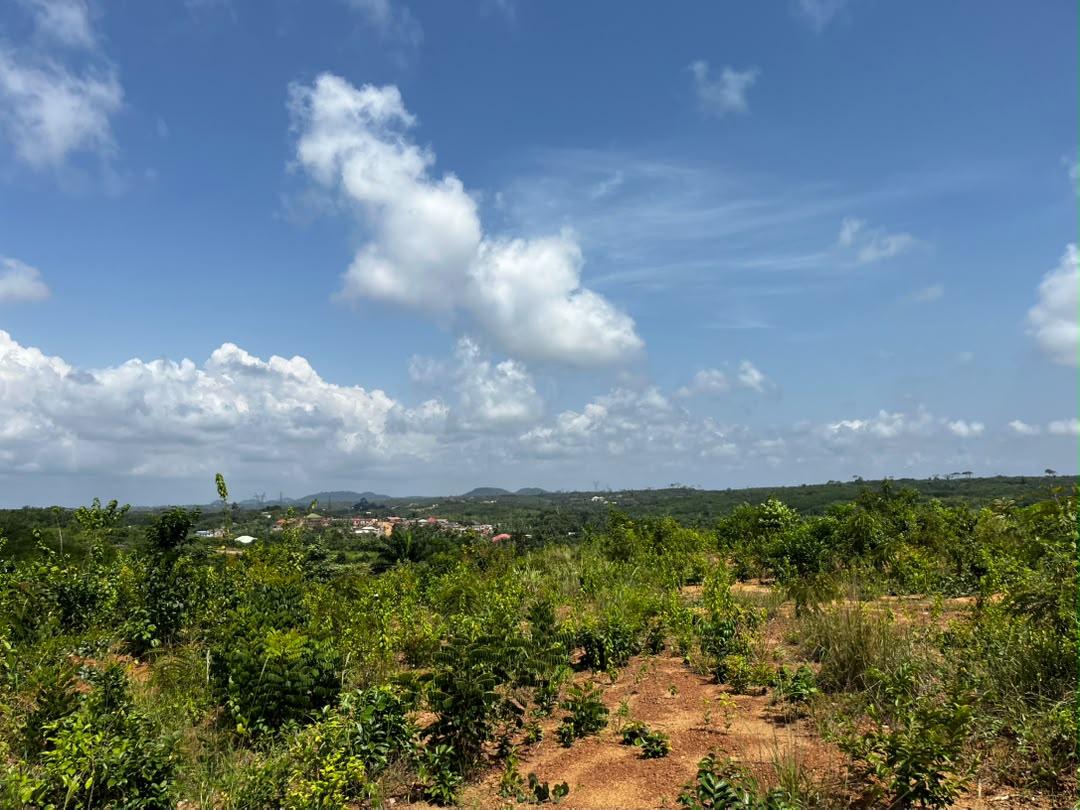
Buying land in Ghana is one of the most reliable ways to build long-term wealth, especially for Ghanaians in the diaspora who want a foothold back home. But the same market that rewards patient buyers also punishes careless ones. Double sales, disputed family land, and missing paperwork are common enough that the phrase "litigation-free land" has become a selling point in its own right. This guide walks through exactly how to buy land you can actually keep.
Why "litigation-free" is the phrase that matters
Most land disputes in Ghana come down to one problem: the person selling the land did not have a clean, exclusive right to sell it. A single parcel can be sold to two or three buyers, or sold by one member of a family without the consent of the others. When that happens, the courts, not the buyer, decide who keeps the land, and cases can drag on for years.
"Litigation-free" means the parcel has been checked against these risks before money changes hands: the ownership history is clean, there is no pending court case, and the seller has the authority to transfer it. It is not a legal guarantee you can buy off a signboard; it is the outcome of doing the verification below.
Step 1: Identify the land type and the true owner
Before anything else, find out what kind of land you are looking at. Most land in Ghana is either stool/skin land (held by a traditional authority), family land, or private/state land. Each has a different "correct" seller and a different set of documents.
- Stool or skin land should be transacted with the recognised traditional authority, usually with an indenture and the appropriate consents.
- Family land requires the head of family and principal members to sign, not just one relative acting alone.
- Ask for the seller's proof of ownership up front. A seller who cannot show how they came to own the land is a red flag, not a bargain.
Step 2: Do an official search at the Lands Commission
The single most important step is an official search at the Lands Commission using the site plan for the specific parcel. The search shows the registered ownership and flags whether the land is subject to a dispute, a government acquisition, or an existing registered interest. If you only take one action from this guide, take this one.
Step 3: Confirm on the ground with the community and neighbours
Paper checks and ground truth should agree. A physical inspection confirms the parcel exists where the site plan says it does, that the boundaries are not already built on or farmed by someone else, and that neighbours and local leaders recognise the seller's claim. For diaspora buyers who cannot travel, this is where a trusted local partner earns their keep.
Step 4: Inspect the land, in person or remotely
You should see the land before you buy it, even from abroad. A live video walkthrough that shows the access road, the surrounding development, the terrain, and the boundary pillars gives you most of what an in-person visit would. Ask for unedited footage and the ability to direct the camera, not a polished highlight reel.
Step 5: Documentation, payment, and registration
Once the land checks out, the transaction should be documented properly: a signed indenture or deed of transfer, an accurate site plan, and a receipt for every payment. Registration with the Lands Commission is what turns a purchase into recognised ownership, so treat it as part of the deal, not an optional extra you handle years later.
- 1Agree terms in writing, including price, plot size, and payment schedule.
- 2Sign the indenture or deed with the correct, authorised sellers.
- 3Pay through a traceable method and keep every receipt.
- 4Lodge the documents for registration and follow the process to completion.
Buying from abroad: how diaspora buyers stay protected
If you are in the UK, US, Canada, or elsewhere, the risk is not distance itself, it is relying on the wrong person. Work with a registered company that documents each step, shares the search results and paperwork with you directly, and does not pressure you to pay before verification. Remote buyers who insist on the same checks a careful local buyer would demand end up just as secure.
Red flags to walk away from
- A price far below the going rate for the area.
- A seller who resists an official search or rushes you to pay a deposit.
- Land sold by a single family member without the head of family.
- No site plan, or a site plan that does not match the land on the ground.
- Vague answers about how the seller acquired the land.
At BlackpusH Enterprise, every parcel we list is background-checked and litigation-free before it is offered, and we handle documentation and registration for both local and diaspora buyers. If you would like the current plot list and to walk a site on video, we are happy to start with a no-pressure conversation.